
Most chocolate brands buy ready-made chocolate, melt it and mould it. Bean-to-bar is different: we start with raw cacao beans and do every step ourselves in our studio in Bukit Ceylon, Kuala Lumpur. It takes days instead of hours, and it is the only way to control how a bar tastes.
Take the tour first, then read on for what is happening at each stage.
1. The beans
Good chocolate starts on the farm. After harvest, cacao beans are fermented and dried, and this is where much of the flavour is formed. We buy directly from farmers in Malaysia and Venezuela and pay for quality, because no amount of skill in the studio can rescue poorly fermented beans.
2. Sorting and roasting
Every sack is sorted by hand. Broken, flat or mouldy beans come out. The rest are roasted in small batches, and each origin gets its own roast: enough heat to develop flavour, never so much that it tastes burnt.
3. Cracking and cleaning
Roasted beans are cracked and the papery shell is blown away. What is left are cacao nibs, which are pure cacao.
4. Refining and conching
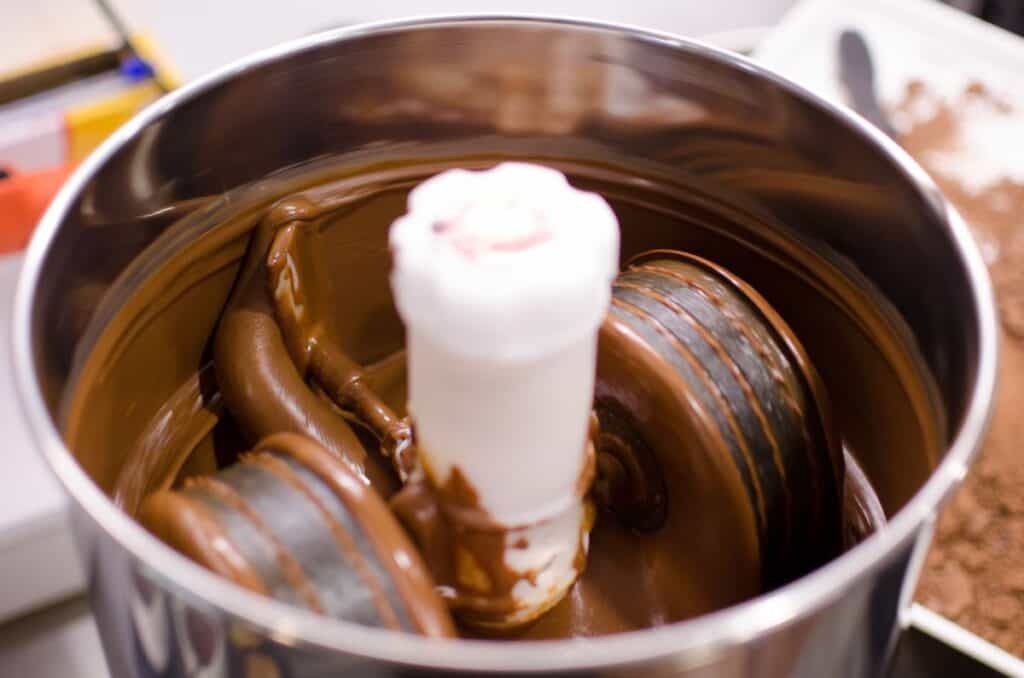
The nibs are ground with sugar for many hours, sometimes days. The grinding makes the chocolate smooth, and the long, slow mixing (called conching) lets harsh, sour notes evaporate so the character of the bean comes through.
5. Tempering and moulding
Finally the chocolate is tempered: heated, cooled and reheated to exact temperatures so it sets with a glossy surface and a clean snap. Then it is poured into moulds, cooled, and wrapped by hand.
Try it yourself
You can do all of this with us. Our one-hour workshop runs on Fridays and Saturdays, and you leave with a bar you made yourself. See the workshop details or shop our single-origin bars.