
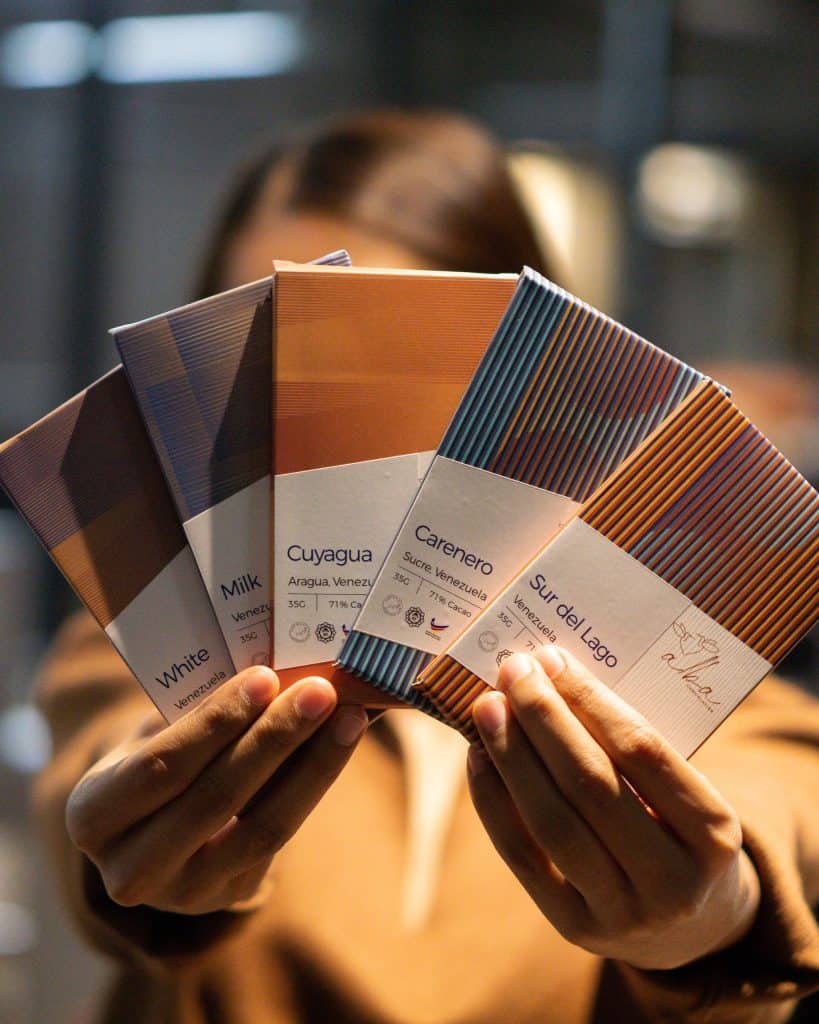
Fine chocolate is closer to specialty coffee or wine than to a candy bar. You can enjoy it without thinking, but slow down for one minute and you will taste far more. This is roughly how judges at chocolate competitions do it.
Before you start
Taste at room temperature, never straight from the fridge: cold chocolate has very little aroma. Have plain water nearby. If you are tasting several bars, go from the lowest cacao percentage to the highest.
1. Look
A well-made bar has an even colour and a soft sheen. Dull grey streaks usually mean it has been stored somewhere too warm.
2. Snap
Break a piece. Well-tempered dark chocolate breaks with a clean, sharp snap. Milk chocolate snaps more softly.
3. Smell
Hold the piece close and breathe in. Rub it lightly with your thumb to warm it. You might find fruit, nuts, flowers, spices or something roasted.
4. Melt, don’t chew
Put the piece on your tongue and let it melt. This is the most important step. Flavours arrive in stages: something at the start, something different in the middle, and a finish that stays after the chocolate is gone.
5. Notice the finish
A fine chocolate leaves a pleasant flavour that lasts a minute or more. If all you are left with is sweetness or a burnt, bitter edge, the bar is hiding something.
What you are looking for
- Clarity: can you name what you taste?
- Balance: acidity, bitterness and sweetness in proportion
- Texture: smooth and melting, not waxy or gritty
- Length: how long the flavour lasts
Try it with two bars
Tasting is easiest by comparison. Take two of our 71% bars from different origins, for example Kuala Lipis and Chemor, and taste them one after the other. Same recipe, different farm, and they do not taste the same. Shop single-origin bars.